 The 1954 battlefield, mountain roads and villages of Dien Bien, explained in English
Places · Dien Bien Phu
Dien Bien Phu: a valley town built on a battlefield
Dien Bien Phu is a working provincial town in a wide rice valley, with the 1954 battlefield scattered through its streets. It is not a pretty town, and that is worth knowing; the reasons to come are the history, the valley and the hills around it.
At a glance
- Province
- Dien Bien (not merged in 2025)
- Nights
- 2 for a first visit
- Airport
- DIN, about 4 km
- From Hanoi
- ~1 h flight or ~10 h bus
- Valley size
- About 20 × 5 km
- Dry season
- October–April
Sources: Vietnam Airlines — Dien Bien Phu to Hanoi route page; Wikipedia — Muong Thanh Valley; LuatVietnam — provinces unchanged in the 2025 reorganisation · last checked .
What the town is actually like
The town grew up around the battlefield after 1954 and became a city in 2003. Since the administrative reform of 1 July 2025 it is no longer a city in the legal sense: its area is divided between the wards of Dien Bien Phu and Muong Thanh, though everyone, from airlines to bus stations, still calls the place Dien Bien Phu. The centre is a grid of shop-houses, government buildings and hotels along the 7-5 Road and Vo Nguyen Giap Street, with the Nam Rom river running through it.
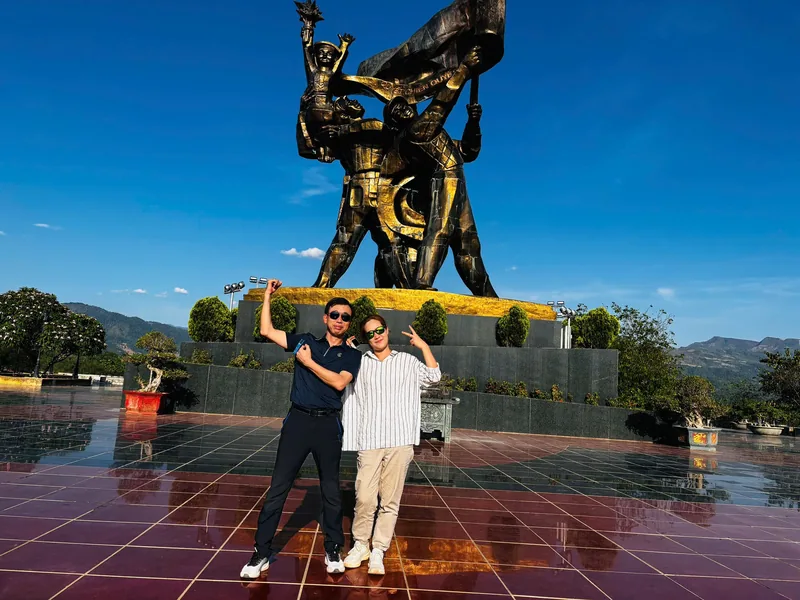
Several of the hills that formed the French defensive positions are now inside the town. A1 Hill faces the Victory Museum across the road; the Victory Monument stands on Hill D1 above a busy junction; the reconstructed command bunker of Colonel de Castries is across the river on the flat ground of the old camp. Other positions have been built over or cut back by roads and housing, a process the Lowy Institute described as early as 2016.
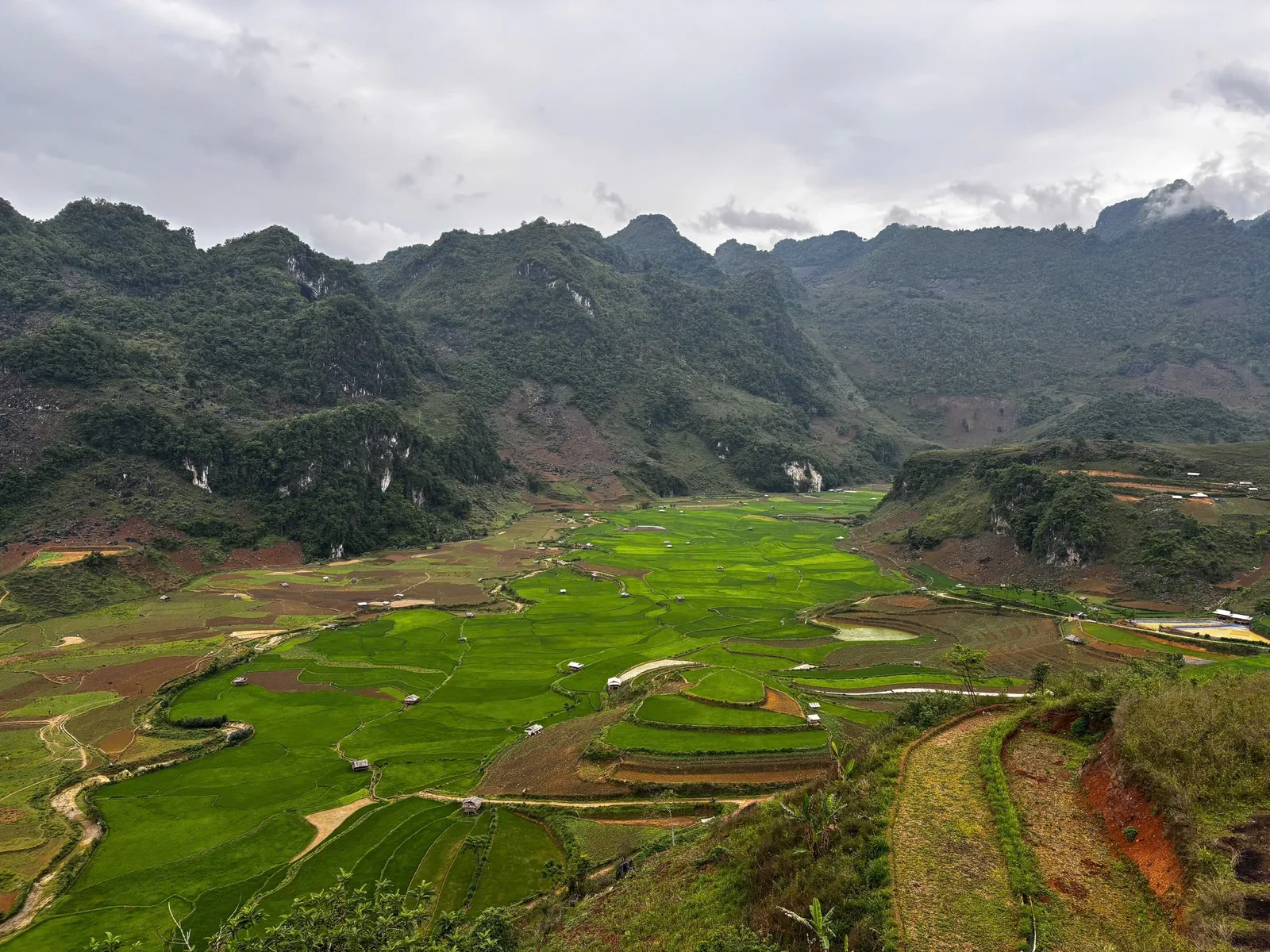
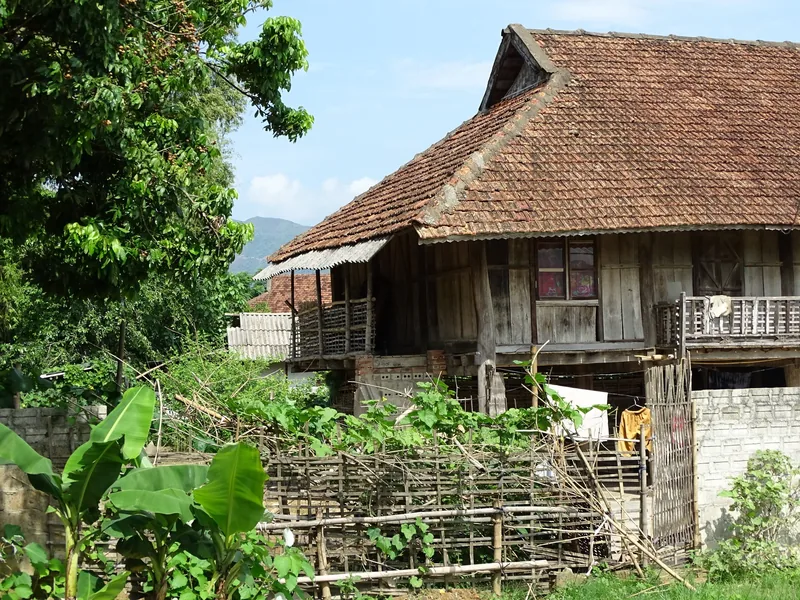
Outside the built-up area the Muong Thanh valley opens out into rice fields, with Thai villages along its edges and hills on every side. The valley is the reason the French chose the site, because of the old airstrip and the flat ground, and it is the reason the battle took the shape it did, with artillery on the surrounding heights looking down on the camp.
Sources: Bao Van Hoa — Dien Bien announces its 45 new communes and wards; Wikipedia — Dien Bien Phu ward; Lowy Institute, The Interpreter — Dien Bien Phu: digging into history · last checked .
What to see in and around the town
A1 Hill (Eliane 2)
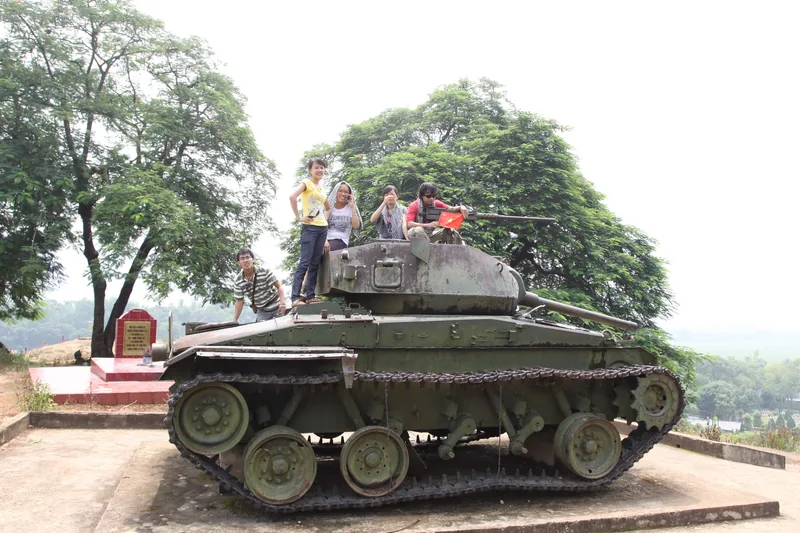
Trenches, a crater from the mine detonated on 6 May 1954, a tank and the bunker remains. The most visited site.
Victory Museum
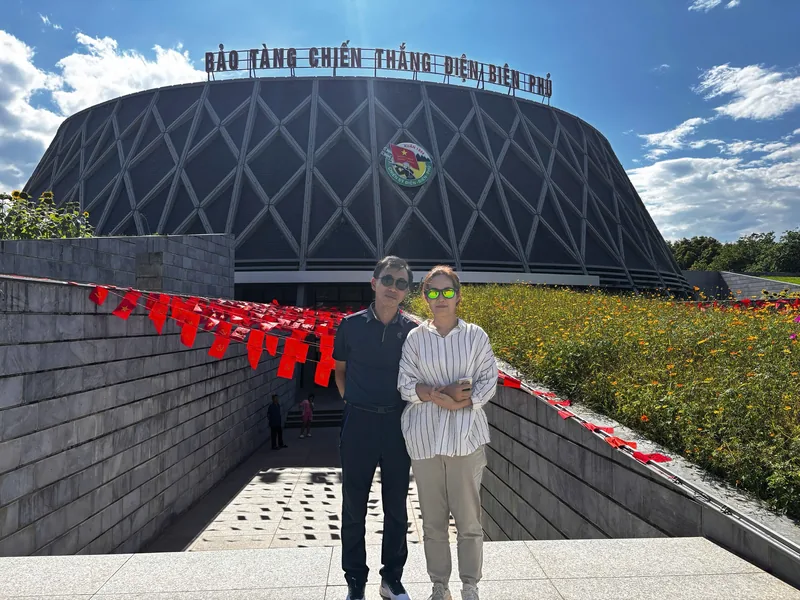
Opened in 2014 opposite A1, with a 132 m panorama painting and labels in Vietnamese, English and French.
De Castries command bunker
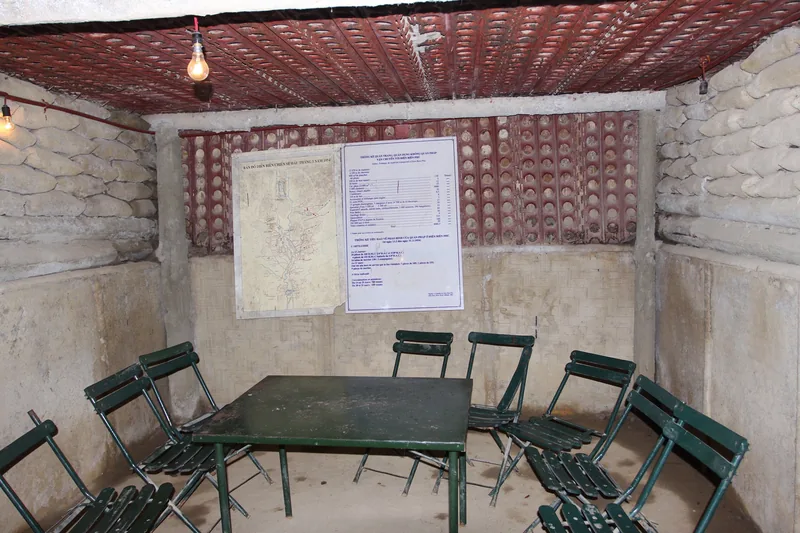
A reconstruction of the French command post, about 700 m east of A1, with guns and tanks around it.
Victory Monument on Hill D1
A 12.6 m bronze statue reached by a long flight of steps, with a view over the valley.
Cemeteries and memorials
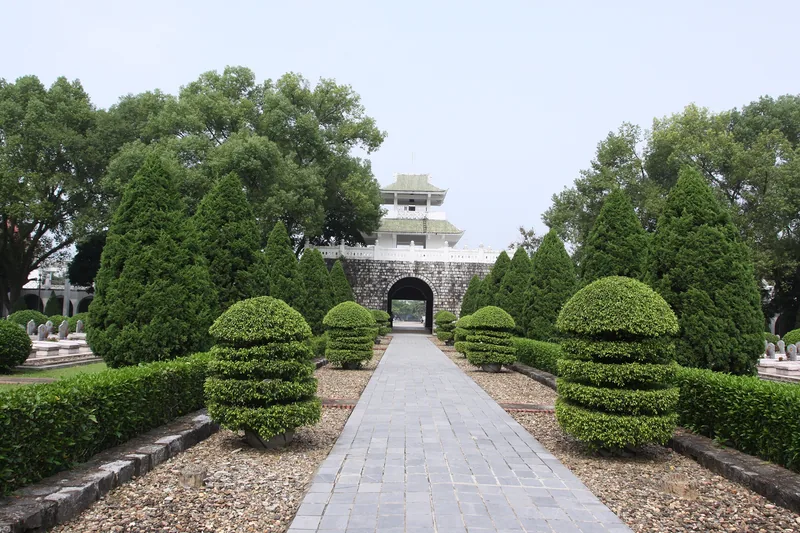
The A1, Him Lam and Doc Lap military cemeteries, the Martyrs' Temple on Hill F, and the French memorial.
Villages and fields
Thai villages on the valley edges, some with homestays, and the rice fields at planting and harvest time.
The battlefield sites page covers each site in detail, with hours and fees. The background page explains what happened where.
Sources: Vietnam Law Magazine — Dien Bien Phu battlefield relics complex; Local Vietnam — Victory Museum visitor guide (independent guide); Vietnam National Authority of Tourism — Statue of Dien Bien Phu Victory · last checked .
How many nights
Two nights is a sensible minimum for a first visit. The sites close at lunchtime, from 11:00 to 13:30, which splits each day into two sessions; a single full day gives you four sessions at most, and the museum alone can take one. A second day lets you go out to Muong Phang and a village without cutting the valley short.
One night works only if you fly in on a morning flight, accept a fast pace and skip Muong Phang. Three nights suits travellers who want time in the villages, or who arrive tired from a ten-hour bus or a long day over Pha Din pass. If you are continuing to Laos, add the night before the crossing, because buses towards Muang Khua leave early.
Sources: Bao Van Hoa — Dien Bien Relics Management Board changes opening hours (March 2026) · last checked .
When to go
Rains concentrate in May–August; the driest, clearest months are November to March. March brings ban flowers, May and early October the rice harvests.
The dry season runs from October to April. Mornings in December and January can be cool, with valley fog that lifts by late morning. The rains build from May and peak in July and August, when mountain roads into the province are most likely to be blocked by landslides. Inside the town the rain matters less than on the roads.
Two dates fill the town. Around 7 May, the anniversary of the end of the battle, hotels and flights are heavily booked, particularly in anniversary years. In March, the annual ban flower festival brings domestic visitors; in 2026 it ran from 6 to 12 March. See when to go for the full calendar.
Sources: VnExpress — Dien Bien travel handbook (December 2023); Viet Nam News — Ban Blossom Festival 2026 moved earlier; VietnamPlus — Vietjet adds flights to Dien Bien (May 2024); Viet Nam News — harvest on the Muong Thanh fields (October 2025); Bao Quoc Te — May harvest in the Muong Thanh basin · last checked .
Getting there
By air, Vietnam Airlines flies from Hanoi, roughly one to two flights a day, in about 1 hour 5 minutes. Since 24 December 2025 there has also been a twice-weekly flight from Ho Chi Minh City, about 2 hours 20 minutes. The airport reopened in December 2023 with a 2,400 m runway able to take Airbus A320 and A321 aircraft, and it is about 4 km from the centre.
By road, the town is about 450 km from Hanoi. Sleeper buses from My Dinh bus station take around ten hours and usually run overnight. Driving or riding yourself, the classic route is through Son La, over Pha Din pass and down from Tuan Giao. Details are on the getting there page.
Sources: Vietnam Airlines — Dien Bien Phu to Hanoi route page; People's Army newspaper — Vietnam Airlines launches Ho Chi Minh City–Dien Bien route; Viet Nam News — Dien Bien airport reopens after upgrades; VnExpress — Dien Bien travel handbook (December 2023) · last checked .
What it costs here
| Item | Range | Note |
|---|---|---|
| Victory Museum, adult | 100,000 VND | Resolution 03/2022; half price over 60, free under 18 |
| Other battlefield sites | About 20,000 VND each, reported | Confirm at the gate; holiday waivers occur |
| Mid-range hotel | 700,000–1,200,000 VND a night | December 2023 figures; check before you go |
| Guesthouse | 150,000–300,000 VND a night | December 2023 figures; check before you go |
| Sleeper bus from Hanoi | 300,000–350,000 VND | December 2023 figures |
| Flight from Hanoi, one way | From about 900,000 VND | Vietnam Airlines lowest fare shown for November 2026 |
Costs rise around 7 May and during the March festival. Outside those dates, the town is inexpensive by Vietnamese standards. Bring cash for village visits and small purchases; card acceptance outside larger hotels is patchy.
Sources: Bao Van Hoa — Victory Museum fee under Resolution 03/2022/NQ-HDND; Local Vietnam — A1 Hill (independent guide); VnExpress — Dien Bien travel handbook (December 2023); Vietnam Airlines — Dien Bien Phu to Hanoi route page · last checked .
Pictures
Who should skip Dien Bien Phu, and when not to go
- Travellers looking for an attractive old town. Dien Bien Phu is modern and functional; its interest lies in the history and the setting.
- Anyone with only a week in northern Vietnam who has no interest in the 1954 history. Sapa, Ha Giang or Ninh Binh are closer to Hanoi.
- Visitors who dislike crowds, in the days around 7 May. Accommodation is tight and the sites are busy with organised groups.
- Overland travellers in July and August with tight connections. Landslides on the approach roads can add hours.
Common questions
Questions readers ask
Is Dien Bien Phu still a city?
Not legally. Since 1 July 2025 its area forms the wards of Dien Bien Phu and Muong Thanh within Dien Bien province. The name Dien Bien Phu is still used for the town, the airport and the bus station.
How far apart are the battlefield sites?
Most are within a few kilometres. A1 Hill and the museum face each other, and the de Castries bunker is about 700 m to the east. Muong Phang is the exception, well outside town.
Can I walk between sites?
A1, the museum, the A1 cemetery and the Victory Monument are close enough to walk between. The bunker and outlying hills are easier by taxi, ride-hailing or motorbike.
Are there ATMs in Dien Bien Phu?
Yes, in the town centre. Outside town, and at the Tay Trang border, do not expect to find one.
Related
Read next

History · Sites
Battlefield sites
Each 1954 site in the valley explained, with current opening hours, fees and visiting order.
Read more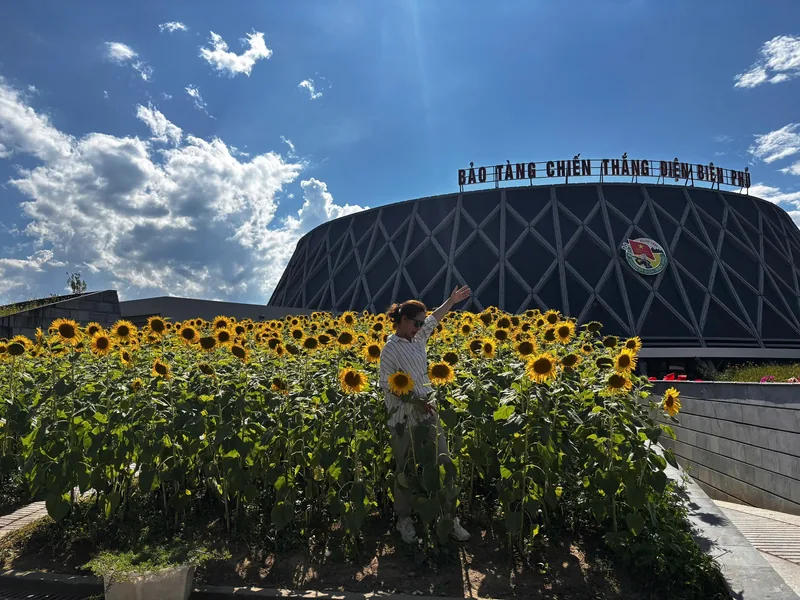
History · Background
The 1954 battle
The battle in brief: background, the 56 days, losses on both sides, and how it is remembered.
Read more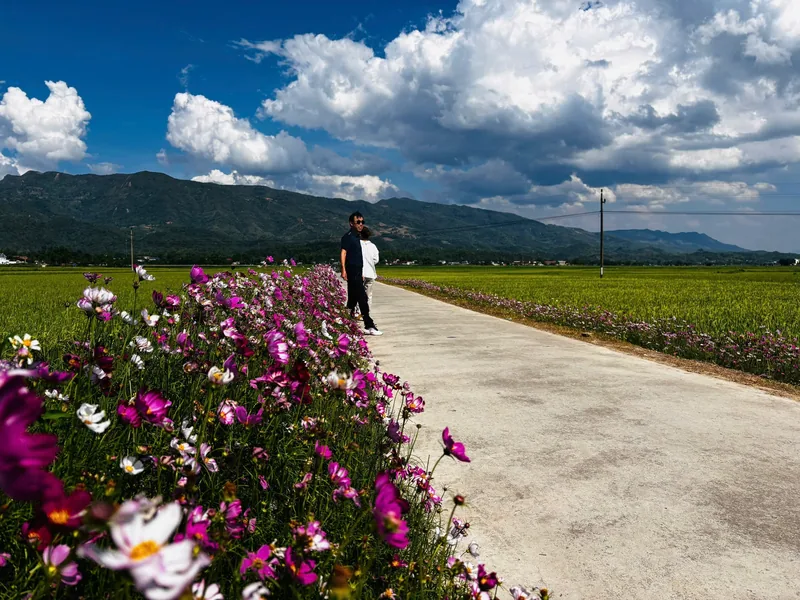
Places · Muong Phang
Muong Phang
The command headquarters in the hills east of Dien Bien Phu, with the nearby village and lake.
Read more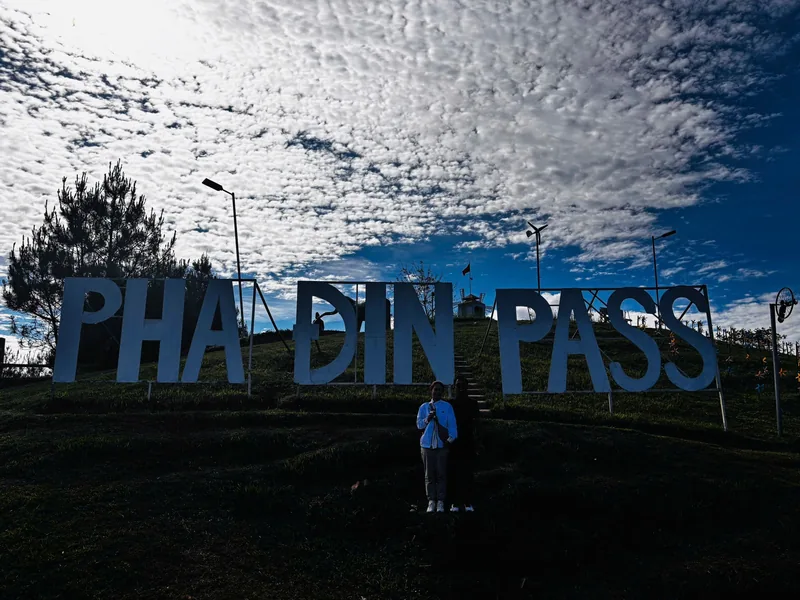
Planning · Getting there
Getting there
Flights, sleeper buses and riding to Dien Bien Phu compared, with times, fares and the rules for motorbikes.
Read more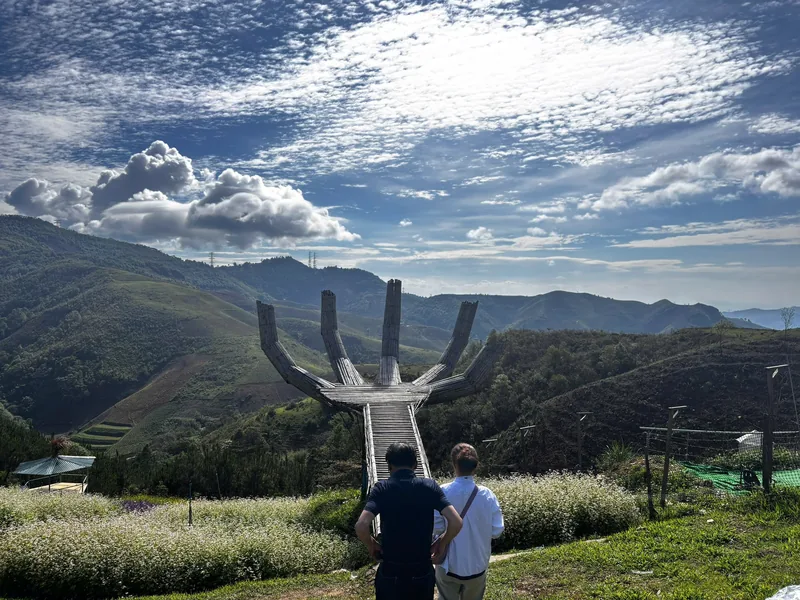
Planning · Seasons
When to go
Dien Bien month by month: dry and wet seasons, ban flowers in March, rice harvests and anniversary dates.
Read more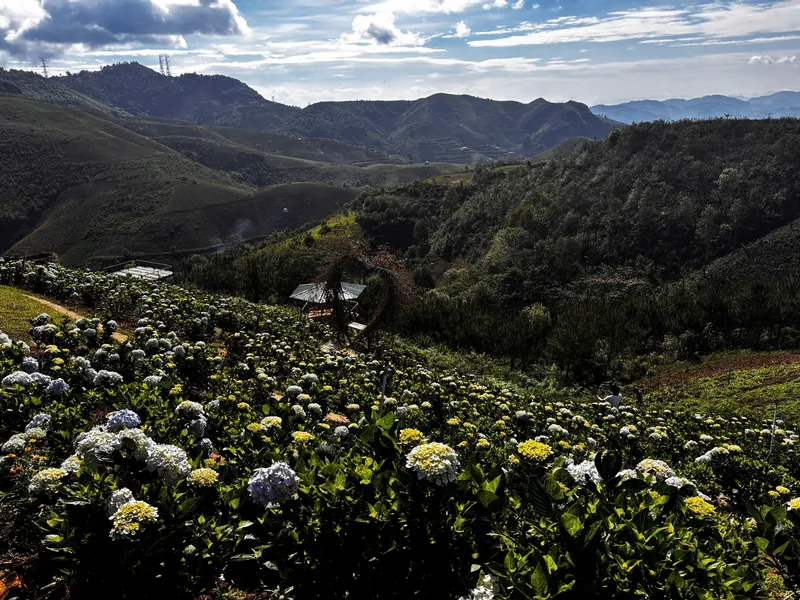
Places
Places
The four main areas of Dien Bien province side by side: distance, time needed and who should skip them.
Read more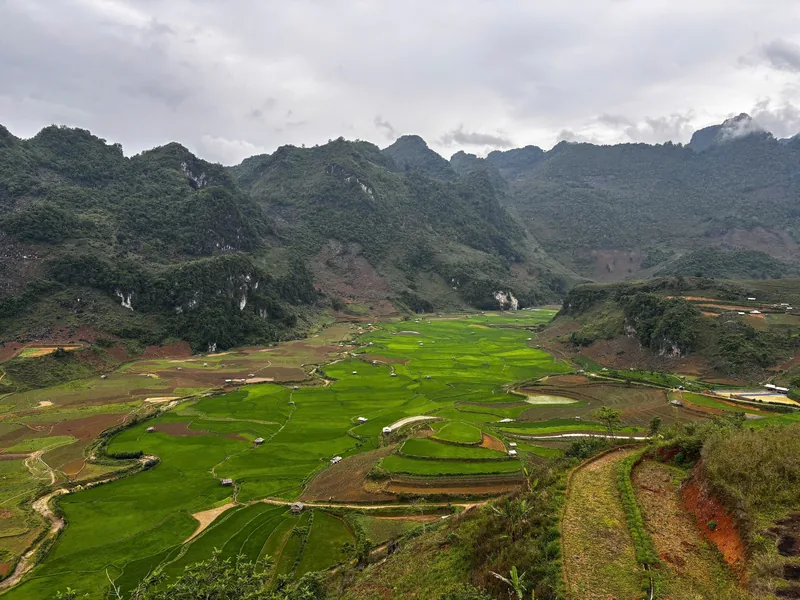
Start planning
Send a correction or a question
Tell us which page you are writing about, what you found and when. A link to an official notice or a photo of a sign helps us check it.