 The 1954 battlefield, mountain roads and villages of Dien Bien, explained in English

History · Background
The 1954 battle, explained without taking sides
Between 13 March and 7 May 1954, a French Union garrison in the Dien Bien Phu valley was surrounded and defeated by the forces of the Viet Minh. This page sets out what happened, why it mattered, and how the two sides remember it, for visitors who did not grow up with either story.
The battle in brief
Sources: French Ministry of the Armed Forces, Chemins de memoire — Battle of Dien Bien Phu; Wikipedia — Battle of Dien Bien Phu (casualty figures from several sides) · last checked .
Why there was a battle here
After 1945, France tried to restore its control over Indochina, and from 1946 it was at war with the Viet Minh, the independence movement led by Ho Chi Minh. By 1953 the war had lasted seven years. The French commander-in-chief, General Henri Navarre, decided to set up a strong base deep in the north-west, in the remote Dien Bien Phu valley near the border with Laos.
Between 20 and 22 November 1953, in Operation Castor, French paratroopers dropped into the valley and took over its old airstrip. The idea was to block Viet Minh movements towards Laos and to draw their main forces into a battle on ground of French choosing, where artillery and air power would defeat them. The base would be supplied entirely by air.
The plan rested on two assumptions: that the Viet Minh could not bring heavy artillery through the mountains, and that the airstrip could be kept open. Both turned out to be wrong.
Sources: French Ministry of the Armed Forces, Chemins de memoire — Battle of Dien Bien Phu; Wikipedia — Battle of Dien Bien Phu (casualty figures from several sides) · last checked .
The forces
At the start of the battle the garrison numbered around 10,000 to 10,800 men, rising to about 15,000 as paratroopers were dropped in as reinforcements. It was a mixed force: Foreign Legion battalions, paratroopers, North African units from Algeria and Morocco, and Vietnamese and Tai troops. It held a central camp with an airstrip and a ring of strongpoints, plus a separate position, Isabelle, about 6 km to the south.
Figures for the Viet Minh vary by source. A French official account gives 70,000 men with more than 100 artillery pieces, supported by 60,000 auxiliaries; other estimates put combat troops at around 49,500 at the start, with about 15,000 in support. What is not disputed is the scale of the supply effort: guns hauled by hand into the hills overlooking the valley, and food and ammunition carried over mountain tracks by porters, many with bicycles and on foot.
Sources: French Ministry of the Armed Forces, Chemins de memoire — Battle of Dien Bien Phu; Wikipedia — Battle of Dien Bien Phu (casualty figures from several sides) · last checked .
The 56 days
Opening attacks, 13–15 March
The battle began on the evening of 13 March 1954 with an artillery bombardment and an assault on Béatrice (Him Lam), which fell that night. Gabrielle (Doc Lap) was attacked the following night and lost on the morning of 15 March. The speed of these losses, and the accuracy of the Viet Minh artillery firing from the surrounding hills, shocked the garrison. The airstrip soon came under fire, and landing became dangerous and then impossible; from then on, supplies and reinforcements arrived mostly by parachute.
The fight for the eastern hills, 30 March – April
From 30 March the Viet Minh attacked the eastern hills, the Dominique and Éliane positions. Dominique 1 and 2 fell on 30 March. On Éliane 2, which the Vietnamese call A1, the attackers took half the hill, and both sides dug in a few metres apart. Through April, trenches crept across the valley floor towards the camp, squeezing it. By 14 April the attackers held the northern part of the valley, including a third of the airstrip.
The final phase, 1–7 May
In early May the last offensive began. On the night of 6 May a mine dug under Éliane 2 was detonated, and the hill was taken in the early hours of 7 May. That afternoon, the command post of de Castries was overrun and the garrison ceased fighting. A small group from Isabelle tried to escape towards Laos on the final night.
Sources: French Ministry of the Armed Forces, Chemins de memoire — Battle of Dien Bien Phu; Wikipedia — Battle of Dien Bien Phu (casualty figures from several sides); VTV — Hill A1, where blood once stained the trenches; Bac Ninh newspaper — 14 March 1954, attack on Doc Lap hill · last checked .
The human cost
Casualty figures differ between sources and between the two countries, and any single number hides a great deal. The figures below are shown side by side, with their origin, rather than reconciled.
| Figure | Source | |
|---|---|---|
| French Union killed and missing | Over 3,000 (about 1,700 dead, 1,600 missing) | French Ministry of the Armed Forces |
| French Union wounded | About 4,400 | French Ministry of the Armed Forces |
| French Union prisoners | About 10,300 captured; about 3,300 returned | French Ministry of the Armed Forces |
| Viet Minh, Vietnamese figures | 4,020 dead, 9,118 wounded, 792 missing | Vietnamese official figures, as cited by Wikipedia |
| Viet Minh, Western estimates | About 8,000 dead and 15,000 wounded | French Ministry of the Armed Forces; Western historians |
The fate of the prisoners is the part of the story least known outside France. After the surrender, prisoners were marched long distances to camps, and the majority did not return: the French memorial authority states that of some 10,000 prisoners, nearly 7,000 died in captivity.
Sources: French Ministry of the Armed Forces, Chemins de memoire — Battle of Dien Bien Phu; French Ministry of the Armed Forces, Chemins de memoire — the Dien Bien Phu memorial; Wikipedia — Battle of Dien Bien Phu (casualty figures from several sides) · last checked .
What happened next
The surrender came on the eve of the Indochina phase of an international conference already under way in Geneva. The Geneva Agreements, signed on 21 July 1954, ended the First Indochina War. Vietnam was divided temporarily at the 17th parallel, with elections promised for 1956 that were never held. French forces withdrew from the north, and within a few years the country was again at war, this time with the United States involved.
For Vietnam, the battle is remembered as the decisive victory that ended colonial rule. For France, it marked the end of its presence in Indochina and is remembered as a defeat in which soldiers fought under very hard conditions, and as a story of prisoners who did not come home.
Sources: French Ministry of the Armed Forces, Chemins de memoire — Battle of Dien Bien Phu · last checked .
How it is remembered on the ground
In Dien Bien Phu itself, the battle is presented as a national victory: the museum, the Victory Monument and the military cemeteries are national sites, and the anniversary on 7 May is a major event. The French experience appears mainly in the small memorial to the French dead, maintained with French government funding. Since the 1990s, French veterans, students and officials have visited, and in 2018 the French prime minister laid a wreath at the memorial.
Visitors from either country, and from elsewhere, are generally received politely. It helps to approach the sites as places of mourning as much as of history: tens of thousands of families on both sides lost someone here.
Sources: French Ministry of the Armed Forces, Chemins de memoire — the Dien Bien Phu memorial; Vietnam Law Magazine — Dien Bien Phu battlefield relics complex · last checked .
Words you will see on the sites
- Chiến thắng — victory. Used in the names of the museum and monument.
- Nghĩa trang liệt sĩ — martyrs' cemetery, the Vietnamese military cemeteries.
- Hầm — bunker, as in the de Castries bunker.
- Đồi — hill, as in Đồi A1.
- Sở chỉ huy — command headquarters, as at Muong Phang.
With this page and the sites guide, you should be able to follow the main displays even where labels are in Vietnamese only.
Common questions
Questions readers ask
How long did the Battle of Dien Bien Phu last?
56 days, from 13 March to 7 May 1954.
Why did France choose Dien Bien Phu?
To block Viet Minh movement towards Laos and to draw its main forces into a battle against a fortified, air-supplied base. The plan assumed the Viet Minh could not bring artillery into the surrounding hills.
How many soldiers died at Dien Bien Phu?
Figures differ by source. French official figures give over 3,000 French Union killed and missing; Vietnamese figures give 4,020 Viet Minh dead, and Western estimates put Viet Minh dead at around 8,000. Many prisoners died after the battle.
Is it appropriate for French visitors to go to Dien Bien Phu?
Yes. French veterans, students and officials have visited since the 1990s, and there is a memorial to the French dead in the town.
Related
Read next

History · Sites
Battlefield sites
Each 1954 site in the valley explained, with current opening hours, fees and visiting order.
Read more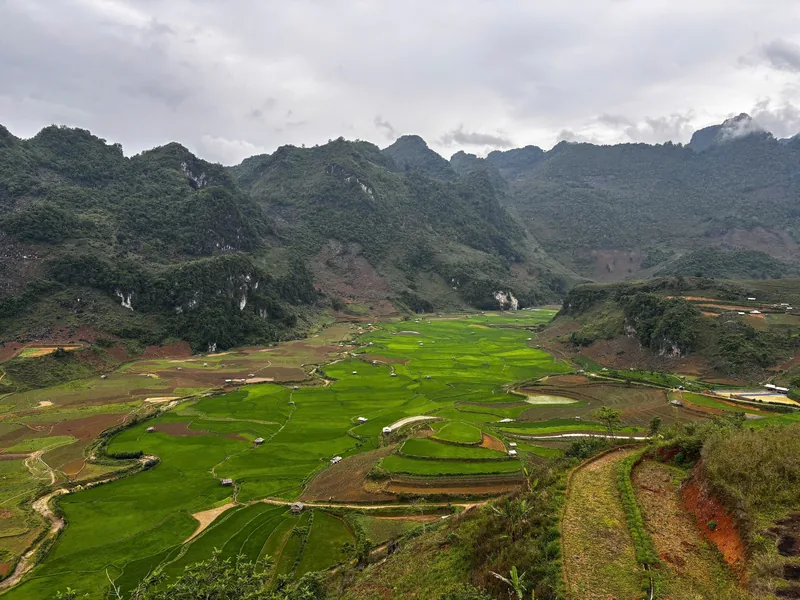
Places · Dien Bien Phu
Dien Bien Phu
The town and valley at the centre of the province: sites, nights, seasons, transport and costs.
Read more
Places · Muong Phang
Muong Phang
The command headquarters in the hills east of Dien Bien Phu, with the nearby village and lake.
Read more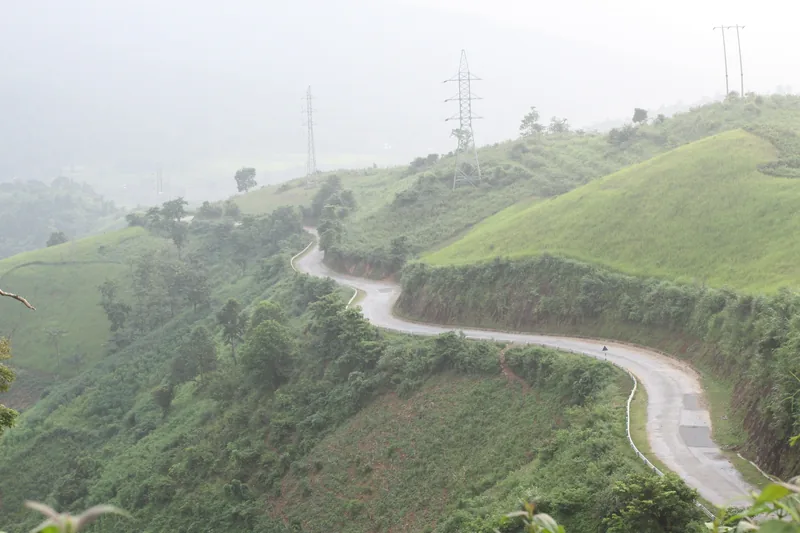
Independent guide to Dien Bien province
Home
Start here: what Dien Bien is, where the main places are and how this guide is organised.
Read more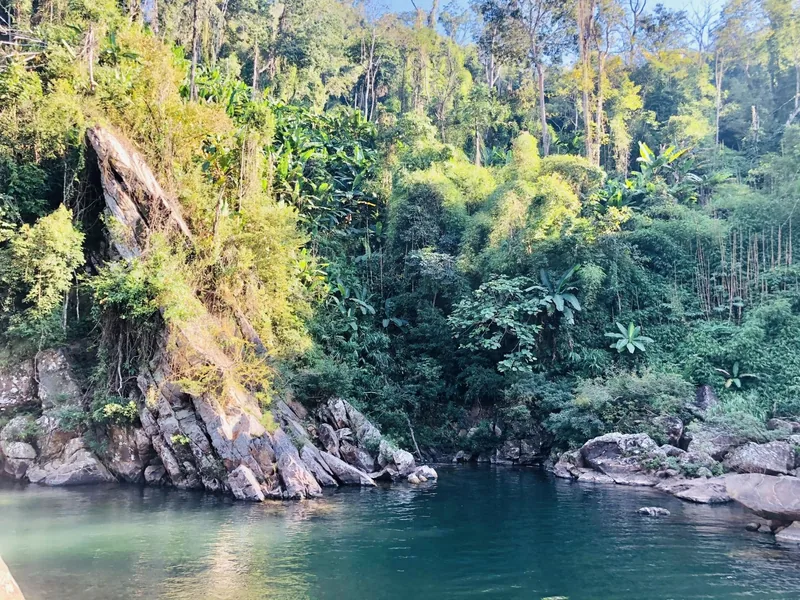
Planning · Days
How many days
Sample plans for one to five days in Dien Bien, and how arrival, opening hours and seasons change them.
Read more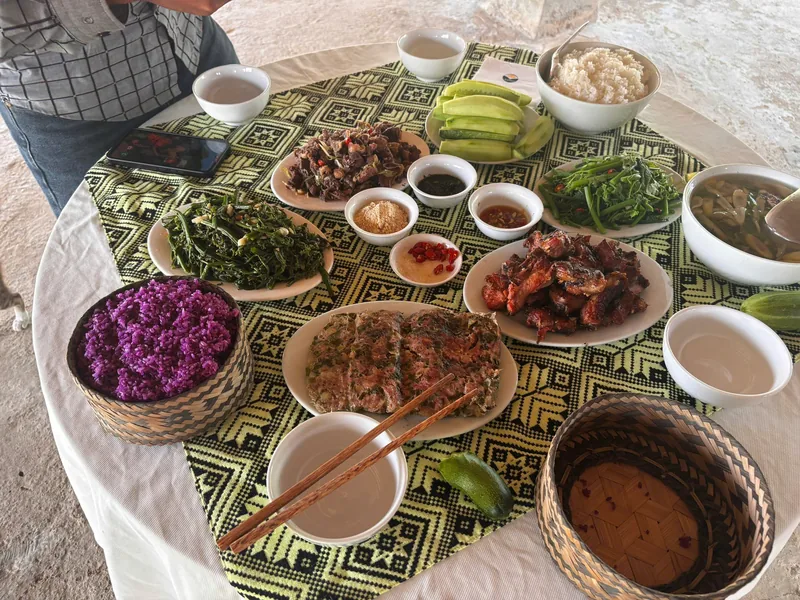
This guide
About
Editorial policy: what the guide covers, sources, dates, advertising and how corrections are made.
Read more
Start planning
Send a correction or a question
Tell us which page you are writing about, what you found and when. A link to an official notice or a photo of a sign helps us check it.